General (PhotoRendering Global Illumination Parameters)
Of the many GI-related parameters, the Diffuse Depth value can make a significant difference in rendering quality. It defines the number of times light reflects in a scene, i.e. how often a “ray of light” is reflected from surfaces.
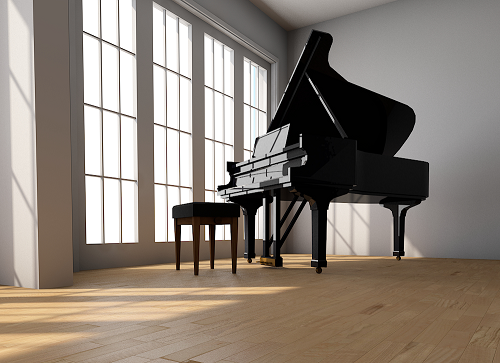
•The minimum Diffuse Depth value of 1 (as in the following image) results in only a direct illumination via flat, light-emitting elements. This will be sufficient for most external scenes, with Physical Sky or HDRI Sky providing a significant light source.
•A Diffuse Depth value of 3 (as in the following image) is required to achieve an indirect illumination, i.e. light reflected from other surfaces. A minimum value of 2 will be required for interior scenes.
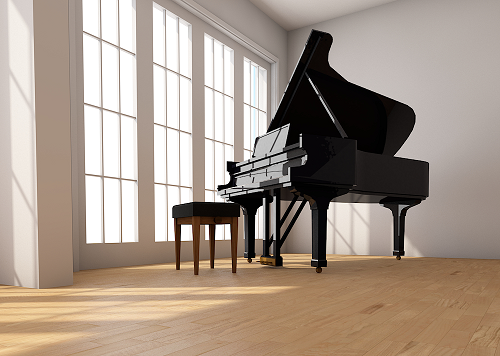
Greater Diffuse Depth values will result in correspondingly, but moderately, longer render times (the difference between a value of 1 and 2 is greater than that between 2 and 8, but the dispersion of light will become increasingly homogeneous, brighter and more realistic. However, the effect at values greater than 3 in a normal scene will become less and less noticeable and the rendered result will simply become brighter.
Note that gamma correction can, within limits, be used to compensate for lower Diffuse Depth values.
Tip: When “real” light sources are used, indirect illumination can already be achieved with a Diffuse Depth value of 1 because the objects illuminated by the light source will be recognized as a luminous object.
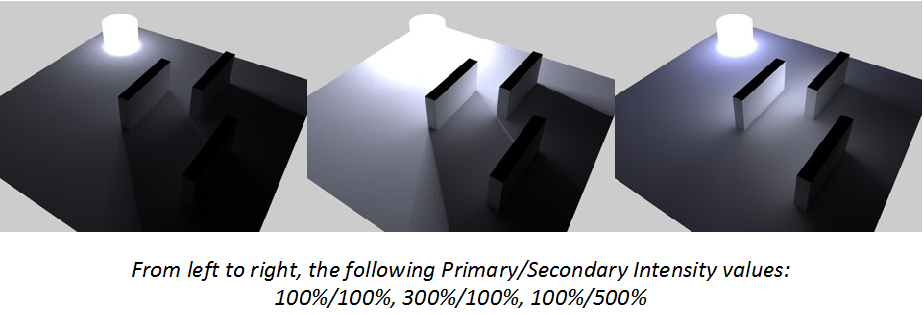
Primary Intensity/Secondary Intensity
Use these parameters to adjust the GI brightness based on the number of light reflections. The Primary Intensity parameter affects the regions being illuminated directly; the Secondary Illumination parameter affects reflected light.
Gamma
This gamma value only affects the indirect GI lighting. Gamma values define how the internally rendered brightness values should be displayed in RGB mode. Simply stated, a progression from the darkest (black) to brightest (white) is defined.
This lets relatively dark renderings (e.g. resulting from a low Diffuse Depth value) be brightened. But be careful - high gamma values will reduce contrast and “flatten” the overall image (values ranging from 1 to 3 have proven to be most effective; in some instances higher values may be necessary). Values less than 1 will darken the image, whereas values greater than 1 will brighten an image.